
Comment13 min read
How methane emissions could learn from history
Most environmental laws follow a familiar path:
Scientists spot a problem, the public gets worried, and the governments eventually act. Methane broke that pattern. But in doing so, have we lost sight of what can be learned from other emissions, like NOx?

Written by
Peter Evans
Head of Commercialization
An older idea than you think
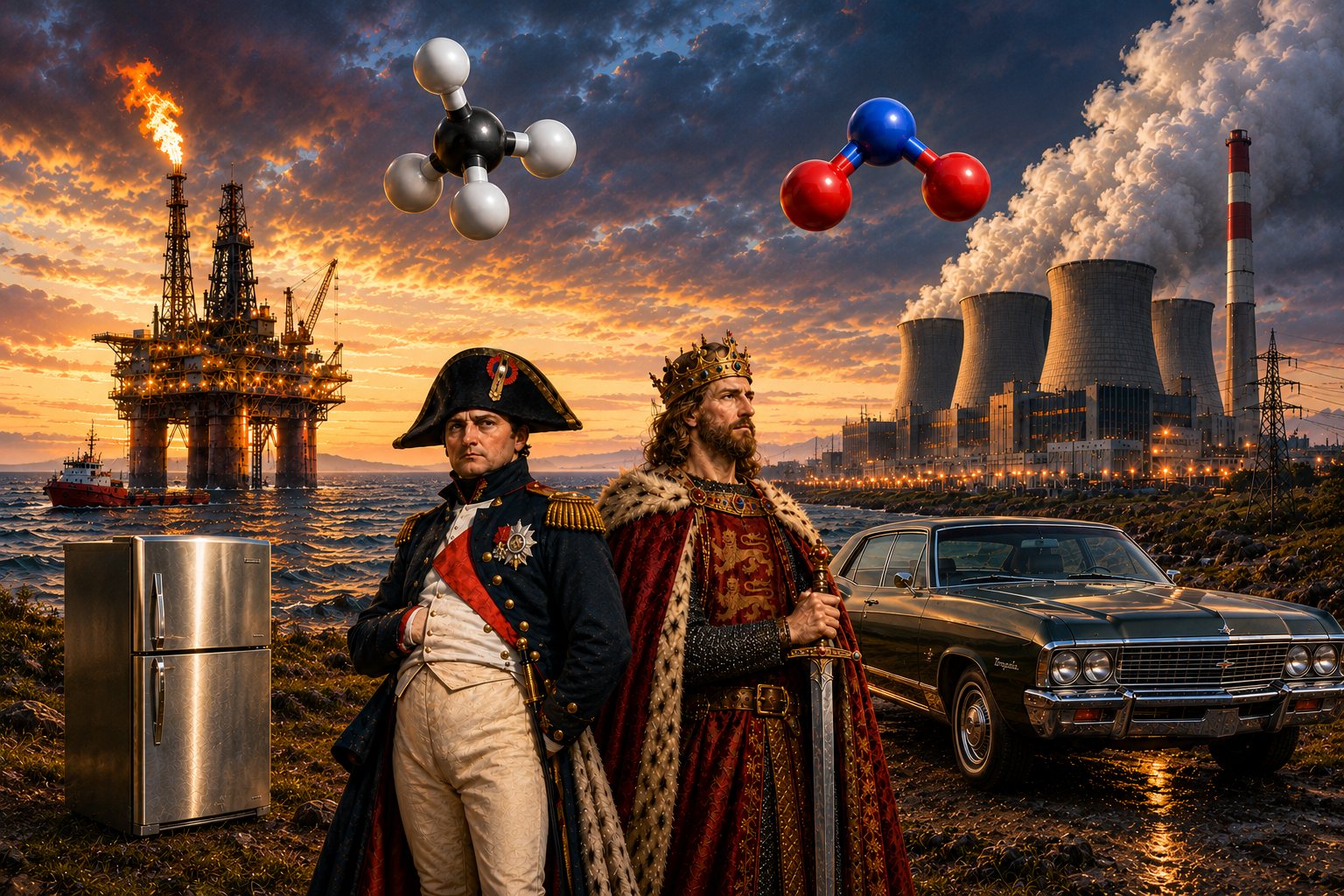
We like to think of environmentalism as a modern concern, but that is far from true. In 1306, King Edward I banned the burning of sea coal in London because of the choking smoke it produced.
But if anyone deserves the title of father of environmental law, it might be Napoleon. His decree of 1810 on “unhealthy, inconvenient or hazardous establishments” is widely seen as the first modern industrial pollution law. It ranked factories by how much nuisance they caused, required the worst to get permission before opening, and set how far they had to be from people’s homes. Every industrial permit issued today is its direct descendant.
From observation to law
I’ve spent my career in industrial environmental compliance and worked on water and air quality, biodiversity, waste, industrial chemicals, noise and, for the past decade, the ever-present issue of climate change. But whatever the topic, the route from the problem to regulation has followed the same path:
This is rarely quick. London’s coal smoke problem dated back centuries, yet real change only came after the deadly “pea-souper” smogs of the 1950s, when burning coal filled the air with Sulphur dioxide and soot. The 1956 Clean Air Act followed, but not before many thousands of people had died prematurely.
Acid rain, smog and the hole in the sky
Slow as it is, the system broadly works. Growing up in the 1980s, I remember two big environmental stories: acid rain and the hole in the ozone layer. Both show the classic path in action.
Acid rain first made headlines in Scandinavia. Lakes and rivers in Sweden and Norway were turning acidic, and salmon and trout were disappearing. In the late 1960s, Swedish scientist Svante Odén argued the culprit was pollution blown in from abroad, from British and central European power stations. The real turning point came in the early 1980s, when reports of dying forests swept West Germany.
Scandinavian countries pressed Britain, nicknamed the “dirty man of Europe” for dragging its feet, while Canada pressed the United States over acid rain falling on its lakes. The result was the 1985 Helsinki Protocol, which committed signatories to cut Sulphur emissions by 30%. Three years later, it was followed by the Sofia Protocol to limit nitrogen oxides (NOx). The EU's Large Combustion Plant Directive followed which was translated into law at member country level.
The US had its own story. Los Angeles had suffered bad smog since the 1940s, and people assumed it was the same Sulphur pollution that blighted London. But in 1952, chemist Arie Haagen-Smit showed it was something new: photochemical smog, formed when nitrogen oxides and hydrocarbons from car exhausts react in sunlight. NOx irritates and inflames the airways. Short bursts of high exposure cause coughing, wheezing and asthma attacks, while years of breathing it are linked to weaker lungs and childhood asthma. The laws followed about two decades later. California brought in the first limits on NOx from new cars in 1971.
The ozone hole was a harder sell, because you couldn’t see the damage. Chlorofluorocarbons (CFCs) escaping into the atmosphere were depleting the ozone that shields us from harmful ultraviolet light. The 1987 Montreal Protocol, new national laws and clever engineering replaced CFCs with safer alternatives, such as fridges that run on isobutane.
And the atmosphere is recovering. The pea-soupers and visible smogs of London and LA are confined to history. Ozone levels should return to their 1980s averages by around 2040. It's rightly hailed as a success story, showing how research, public pressure, engineering, monitoring and law can work together to make things better. The European forests bounced back, only to face their next big challenge – climate change.
Methane: a slow start
Methane's story began in the usual way. In the 1860s, the Irish physicist John Tyndall found that methane could trap what he called "radiant heat". In 1948, Belgian scientist Marcel Migeotte detected it as a trace gas in our atmosphere.
By the 1970s, methane was on the list of gases thought to contribute meaningfully to global warming, alongside carbon dioxide. By the late 1980s, scientists were publishing evidence that its levels were rising. For the first time they could also say where it was coming from, including leaks and releases from the production, transport and use of coal, oil and gas.
Policy followed the familiar steady path. Methane was named in the 1992 UN Framework Convention on Climate Change, which launched the annual COP summits, and was covered by the binding targets of the 1997 Kyoto Protocol. But it wasn't singled out until 2021, when the Global Methane Pledge at COP26 in Glasgow committed signatories to cut methane emissions by at least 30% below 2020 levels by 2030.
How methane broke the rules
Why is there such an interest in methane? In short, it buys us time. With a short atmospheric residency but high global warming potential, any action taken to abate methane emissions has an impact that could be felt in decades not centuries. Time needed in which to transform the global energy landscape towards a net zero future.
What made methane distinct is that some of the biggest emitters started measuring, reporting and cutting their emissions before any law told them to. So why did they?
Part of the answer is money. In the US, methane was on the agenda well before Kyoto, framed as lost product rather than pollution. The EPA launched its voluntary Natural Gas STAR program in 1993 to help companies plug leaks and sell the gas. In 1996, the Gas Research Institute published a major study of methane emissions across the US gas system, which shaped national inventories for years.
Then came the shale gas boom. New drilling and fracturing techniques unlocked vast reserves and transformed America's energy trade. Methane emissions followed the growth in production. But they also put the methane problem, quite literally, on the doorstep of some of the world's leading environmental research groups and campaigners.
By this time, oil companies were already under pressure over carbon dioxide. In 2015, an investor coalition called "Aiming for A", including the Church of England's investment bodies and UK pension funds, asked BP and Shell to report on how ready they were for a low-carbon transition. Both boards backed the resolutions. They only demanded disclosure, not emission cuts, but they showed that shareholders were watching. A key part of the argument for gas angled on its lower emissions relative to coal and its capacity to be a bridging fuel towards a cleaner, renewable, future. Methane emissions put that premise at risk.
So when methane losses entered the debate, they landed in an already heated argument about whether natural gas really could be the bridge between coal and renewables. The answer depended on how much gas was being emitted, and nobody knew for sure.
The powerful US NGO, the Environmental Defense Fund (EDF), set out to find out. It had worked on climate policy since the 1980s, but around 2011–2012 it decided the leak-rate question needed solid data rather than competing guesses.
In September 2014, at the UN Secretary-General's Climate Summit in New York, the Oil and Gas Methane Partnership (OGMP) was born. Hosted under a UN Environment Program coalition and co-designed by EDF, its first members were mostly European oil majors and a few national oil companies. They agreed to survey nine "core" methane sources in their operations, adopt practical fixes and report progress every year.
Onshore vs offshore: How methane varies
The pioneering US work opened the door to detailed studies of oil and gas emissions, but it soon became clear that shale basins don't represent oil production everywhere. Each has its own emissions characteristics.
Onshore US fields are spread out, and most sites have nobody on them most of the time. Equipment there is often driven by the pressure of natural gas itself, venting small amounts as it works. When something fails, a leak starts or a flare goes out, there's no one around to notice or fix it.
Large offshore platforms, from the Gulf of America to the North Sea, West Africa and the Caspian Sea, are very different beasts. They're permanently crewed, and leaks and flare failures are watched closely because they put people in immediate danger. As industry researchers dug deeper, they found such incidents were less common offshore.
What mattered more offshore was how efficient the equipment was, and how much methane was deliberately vented or escaped unburnt from engines and flares. That meant methane intensity, the share of methane lost compared with marketed gas, varied hugely from site to site. Countries that had existing environmental laws covering volatile organic emissions, such as in Norway, saw far lower emissions than elsewhere. There was enough data for companies to set their first intensity targets, improving the quality of the measurements, and take action before all of the details were nailed down.
By the time the UN partnership was upgraded to the stricter OGMP 2.0 in 2020, companies were trialing different measurement systems, backing start-ups with new detection technologies and, crucially, sharing what they found.
Of course, there are also sites where associated gas was not being managed. This led to large scale flaring and venting – but these are also coming ever more under the gaze of the satellite technology which could spot these “super-emitters”.
And, just like its polluting forebears, the system is working. Reported methane intensity, the ratio of methane emitted to oil and gas production is coming down. The Oil and Gas Climate Initiative (OGCI) reports that members' aggregate upstream operated methane intensity was 0.13% in 2025, down 62% compared with 2017, and that their aggregate methane intensity has improved year-on-year for eight consecutive years.
Methane measurements may be new. Measurement isn’t
But in the rush to measure and control methane, it's tempting to treat it as a unique problem. And in doing so lose sight of what can be learned from history.
Firstly, we must never forget that methane is part of a wider challenge – climate change. Any action to decrease methane must consider the bigger picture.
Consider the issue of flaring. A flare is arguably one of the most iconic parts of an oil facility, so much so that it even appears on the logo of some companies. It is fundamentally a safety device – there to remove potentially harmful and combustible gases through a controlled burn. But it can also be hugely wasteful. Half of the gas flared globally would be sufficient to power sub-Saharan Africa. That is why bodies such as the World Bank have taken such a keen interest – launching their zero routine flaring program back in 2015.
But as operators abate flaring, and installed flares spend more of their time at low flow rate so they are exposed more to the vagaries of flow, composition and the weather. These combine to lower efficiency of the burn, releasing more methane as non-combusted gas. And because methane has a substantially higher global warming potential than carbon dioxide, the lowest achievable flow rate is not necessarily the least harmful.
Understanding the co-dependency of different emissions therefore matters. Nowhere is this more significant than when addressing combustion products from power generation in the oil and gas industry.
Take an average oil or gas platform and today, the power that the site needs for its own purposes is by far the largest source of greenhouse gases. Electricity generating turbines, gas compressors, engines, heaters and boilers – all using some of the produced fossil fuels to drive their own operations. Like the flare, they can release unburnt hydrocarbons – most commonly when operated below their installed capacity and colloquially referred to as methane slip. But, as we know from history, power plants can also be a significant source of other pollutants, like NOx, with regulations in place to limit their emissions.
So each power plant has a balancing act to achieve, reconciling the needs for power production, greenhouse gas emissions and air quality effects. The only real solution to this is to be monitoring them all in real-time and adapting to the changing circumstances that the plant is being asked to deliver. And this is especially important for stationary combustion sources such as turbines, because of the inverse correlation between the conditions that lead to high methane slip and those that lead to high NOx.
A turbine running cold – such as during start up, or a turbine running at low load can be plagued by high methane emissions. Some of the fuel is going unburnt. Conversely, high temperatures and running close to the load limits push up the NOx. And this is all set against a backdrop of CO2 emissions. So there is a sweet spot to find.
That is where continuous monitoring technologies play their part, giving a systems level view on a continuous basis. But fitting a new CEMS system on to an oil platform is hard. There is little space, few technicians and getting people and parts to and from an offshore facility is a headache. This is why some of the world’s major energy producers are turning to PEMS – a software-based equivalent that can deliver comparable results by simply tapping into operational data.
And because PEMS is digital, the time resolution of the model is dictated by the fidelity of the inputs, not the speed of sampling. This gives minute level accuracy at the times when it matters most – such as during start-up.
When could becomes shall
Programmes such as OGMP 2.0 are voluntary. When it was first [re] launched it sought to maximize the number of companies participating and encompass the full range of operators that signed up. With the technology for methane measurement still in development, it had to be receptive to a wide range of largely new technologies used in quantification. Some have proven to be more successful than others.
This works well until voluntary becomes regulated, as we are now seeing in jurisdictions such as the European Union who, in 2024, published methane regulations imposing exacting requirements for measurement reporting and verification (MRV) on both oil and gas produced within the boundaries of the Union and those fossil fuels imported into it from beyond. And the regulations come with teeth: they require import contracts to meet equivalent MRV standards, then later impose maximum methane intensity values, enforced by member-state penalties. The EU intended to impose methane intensity limits on imported oil and gas from 2030. Higher methane emissions will come with a cost.
And this has created a problem. When you impose a set of rules and penalties based on measurements you have to be sure that the numbers being submitted are correct. Voluntary programs may specify a whole array of different methods that could be used, regulated ones have to be more exacting on what shall be used.
Consider again NOx. Legislative actions such as the Clean Air Act imposed limits on the amount of NOx that could be permitted requiring accurate measurement of emissions. Those measurements were made using approved methods that come with a set of rules as to how the equipment is built – maintained and operated – better known as standards. For PEMS the European document for PEMS is CEN/TS 17198:2018, a technical specification that itself borrows from requirements for alternative technologies such as CEMS. In doing so, when a new NOx PEMS system is supplied from our team in Denmark it can be trusted by clients anywhere in the world. Those industrial systems are validated against more precise reference methods. And once installed the numbers they generate have to be verified by an independent body approved to carry out those checks in a consistent, fair and documented way. Together, that makes the results traceable and trusted.
Methane MRV has some way to go. The standards are in draft, but they are unlikely to be ready for the first cycle of reporting and many of the measurements that will be used by emitters lack the full chain of traceability that other emissions have. Some of the technologies currently being used may falter because they will be unable to demonstrate that they can be trusted, or permit verification.
When we build a PEMS system we follow the same rules that surround more mature emissions, such as NOx. This future-proofs the technology for when legislation catches up with intervention.
Written by Peter Evans, Head of Commercialization at Weel and Sandvig, a provider of PEMS technology based in Denmark.
← Back to Stories