
UpdateAccurate, real-time measuring of unreliable flare emissions
It has been long overdue to create a feasible solution for monitoring and measuring flare emissions that can get the companies to achieve regulatory certainty, cost reductions and enhanced sustainability.
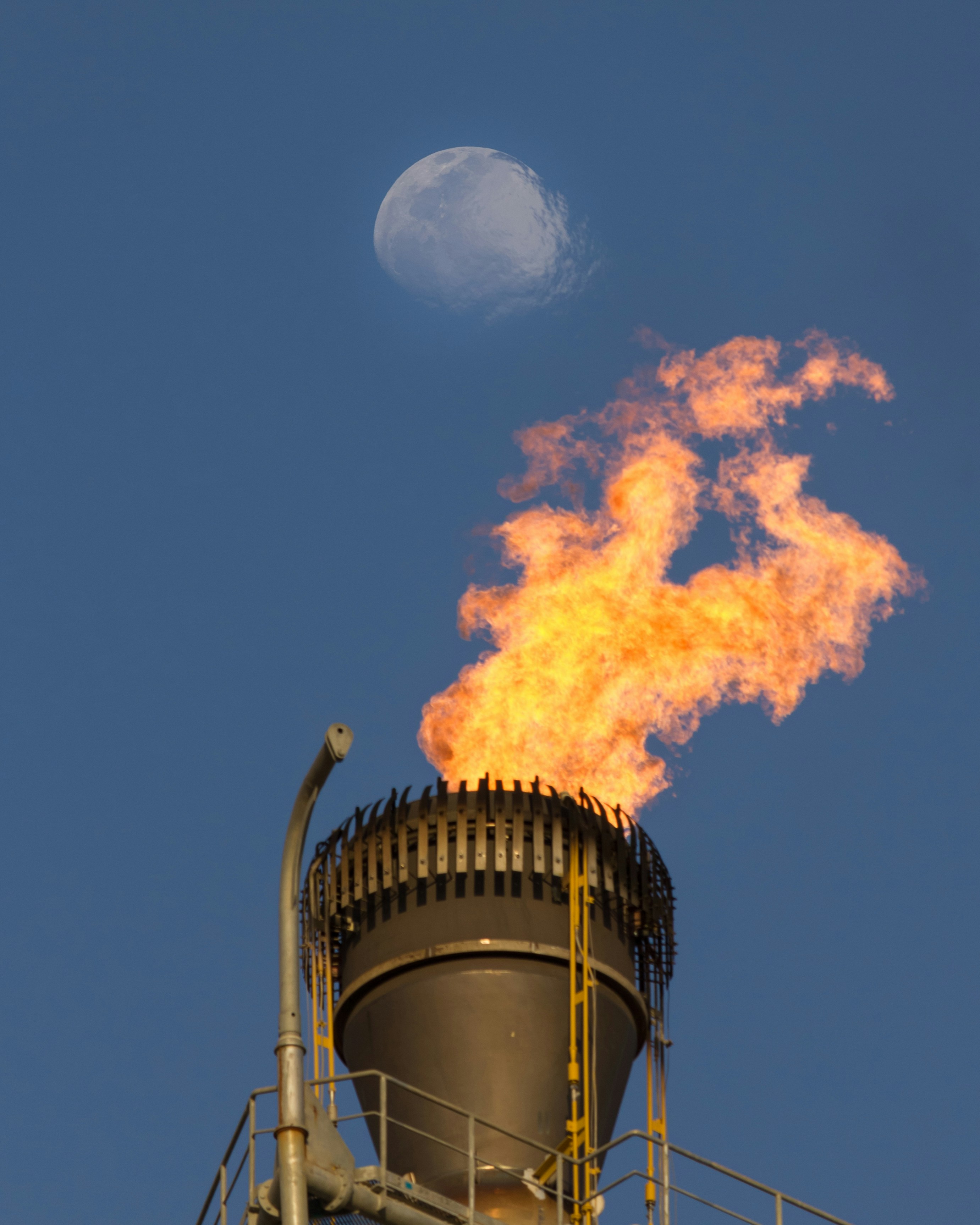
Flare combustion is irregular; therefore, it is not enough to measure occasionally – and definitely not to only do a single measurement. Our Emissions Modeling Engineer Knut Ibæk Topp Lindenhoff was watching flare combustion one night on site and noticed these irregularities. And wondered what to do about it.
With the help from Sønnik Clausen, Alexander Fatlev, and Jan Sandvig, FlareVision was born and an application for the Nordsø program was in the works, distributed, and funded by EUDP.
What is the problem?
Flares are widely used in the oil and gas industry as well as in the biogas industry to burn off the excess gas that occurs. That excess gas primarily consists of methane. Incomplete combustion will lead to the emission of methane as well. Flare combustion is a huge emitter of methane and other harmful emissions; therefore, it is important to have accurate measurements, so you can control the combustions and regulate them to reduce the emissions.
At the moment, emission measurement from flares is done in the following ways:
1) By drones
Flare emissions measured with drones are conducted by having the drone do sweeps over the flare and having a methane detector attached to the drone. The strength of drone measurements is that they are easy to deploy. With classical drone measurements the uncertainty of the measurement is lowered by repeating the measurements several times, however this works under the assumption that the process is stationary. A flare is not stationary, which leads to the drone measurement for the flare to have severe errors. There are also difficulties such as too much inconsistency with the wind which means that you cannot control the drone. Big oil rigs in the seas have a very strong amount of wind, therefore it is not entirely feasible. You only get a few measurement snapshots when using drones, but you need constant measurements. Due to the fact that the combustion is irregular, a singular measurement is not enough, and continuous measurements have to be made to address the irregularity and get a precise and well-rounded picture of the emissions. It also allows the company to adjust the amount of air present in the combustion process to reduce the methane emissions.
2) By camera IR or Optical Gas Imaging (OGI) with one camera
Using infrared optics to capture images of the flame can be used to find the temperature and composition in the flare by solving an inverse problem. However, one camera only creates a 2D projection of the flame and from one side. Flares usually have asymmetric flames which lead to poor approximation and a large uncertainty in the composition determination. To fully measure the gas emissions, the velocity needs to be taken into account. And one single image is simply not enough.
3) Empirical models
There have been developed several simple empirical models that usually depend on fuel flow, wind speed, and fuel composition. These simple equations are overtly generalized as they do not consider the geometry of the flare design, steam injection, and rely heavily on the fuel flow meters. These methods are suitable for a rough estimate which is also the intention, but they should not be used for serious estimations.
Thesis
By creating a setup which contains several infrared cameras and normal cameras, we can secure complete coverage of the flare. That coverage will be used in an advanced combustion model that utilizes a 3D temperature and velocity profile to calculate gas composition and emissions and, in the end, a novel technology for real-time monitoring of flared gas emissions.
The goal is to conform the 2D images into 3D surfaces. The temperature profile (within the flare) will be calculated using inverse methods. The velocity field will be derived from analyzing sequential image frames. These outputs will serve as inputs for the combustion model. The combustion model will use the 3D temperature and velocity fields together with the inlet gas composition to calculate the composition of the flared gas. The model will be based on the stochastic differential equations allowing for complex physical processes to be accurately represented while ensuring fast computation times with minimal delay.
And when you are able to measure the actual methane emissions, you are able to manage them and adjust the amount of air in the combustion process to reduce methane emissions.
Timespan and steps
The project has three different phases over the next couple of years.
Phase one is where we start the research into the combustion model. We need to figure out how many cameras are needed to create a 3D image and how to turn the 2D images into 3D surfaces. We will set up a laboratory and do testing on consequently bigger flames to determine the number of cameras needed to build a 3D surface. Here, we will conduct small scale experiments with controlled flames and some initial experiments with uncontrolled flames.
Phase two is testing on a test facility at DTU Chemical and Biochemical Engineering. Here we can test our setup before moving it into the real world. The ability to perform a test is very valuable before moving it into the real world and perform testing at already existing facilities, as it gives us the opportunity to adjust our calculations and IR camera setup. In this phase, the commercial software will also start to be developed.
Phase three is the final phase, where the measurement setup will be tested on a full-scale flare at a facility in the North Sea. We are happy to announce that TotalEnergies will let us test our measurement setup on their offshore facilities in the North Sea. It is a crucial step towards commercialization and to do the final adjustments to a measurement setup that every company in the oil and gas industry and the biogas industry can use to measure correctly, reduce emissions, and comply with the emissions regulations such as OGMP 2.0.
Three exciting years ahead
With FlareVision, we hope to develop a more feasible solution for monitoring and measuring flare combustion. For us, this is a step towards helping the industries reach zero net emissions sooner rather than later. The project is met with a great deal of enthusiasm from Knut Ibæk Topp Lindenhoff:
"At Weel & Sandvig, we are absolutely and truly excited to study the true core of combustion: The flame. The passion for flames has brought DTU and Weel & Sandvig together, and we are looking forward to, probably, the three most exciting years of our lives. The best thing is that we are helping the climate and the green transition as well."
Stay tuned for all of the tests, the troubles and naturally, all of the fire!